Laser Tube Welding Overview
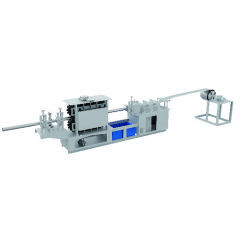
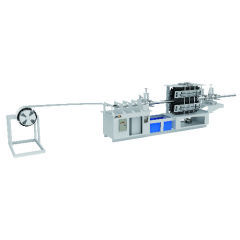
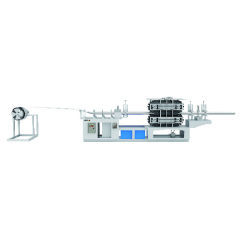
Jackson's laser pipe making machine turns stainless steel coil into a welded round tube for vacuum flask and bottle bodies. A decoiler feeds the strip, the forming section rolls it into a cylinder, and a 1.0 kW laser closes the longitudinal seam as the tube travels, so a finished tube leaves the station in one continuous pass with no manual handling between coil and exit. The tube it produces is the blank that every shaping station after it works from, which is why the weld is treated here as a quality decision rather than a speed decision. - A seam that arrives closed. The laser runs along the joint as the tube travels and lays a narrow, well-bonded weld, so the body reaches the bulging press with a seam that is already joined rather than a bead standing proud of the surface. - A round starting section. Forming rolls and the weld are set up together so the tube keeps a circular section to the exit. Necking, spinning and hydro-forming then work from a body that is concentric instead of one the tooling has to correct first. - Continuous coil-to-tube flow. Strip is pulled from the decoiler, formed, welded and delivered in one pass; nobody carries tube between operations, and the station keeps feeding the next machine through the shift. - Low running cost. Energy goes into the weld rather than into arc support equipment, and the laser package is built for low maintenance — a short daily check instead of a rebuild. - One operator. The operator sets strip tension and weld parameters at the start of the run and then watches seam quality. The station does not need a second pair of hands at the exit. - Built around bottle work. Working length is sized for body blanks, and as a vacuum flask line supplier we set the three builds around flask, bottle and cup diameters rather than general pipe.
Specifications
| Parameter | Value |
|---|
| Mode | JSB-PL10300 |
| Function | Automatic pipe welding from stainless steel coil |
| Technology | Laser welding |
| Working pipe diameter | 20-100mm |
| Working length / tube wall | 2,000–3,000 mm / 0.25–0.8 mm |
| Ovality | ±1.5mm |
| Pipe making speed | max 60mm/s |
| Product percent of pass | 99%(SS304)/97%(SS201) |
| Range of water expanding | 43%(Chinese coil SS304)/38%(Chinese coil SS201) |
| Voltage | 380V~/415V~ |
| Power | 3kw(laser welding)+3kw(water) |
| Decoiler | 1 ton, 1,100 × 900 × 1,100 mm / 2 tons, 1,400 × 900 × 1,250 mm |
| Forming part | 4,700 × 850 × 1,560 mm / 5,500 × 950 × 1,700 mm |
| Weight | 3,000 kg / 3,600 kg |
Build & Diameter Matching
The machine comes in three builds, and what separates them is reach. Each build is dedicated to a diameter band — a narrow one for slim flasks and cups, a middle one for standard bottle bodies, and a wide one for large-mouth bottles and short pots — and the three bands are listed in the specification table above.
Choosing between them starts with the largest finished body you intend to run. Take the body diameter after trimming, allow for the wall on both sides, and pick the build that covers it with room for the next mould size up; a range sitting exactly on the edge of a band leaves no margin when a new shape is added. Then check the other end. A build sized for large bottles can feel awkward on a narrow cup, and if the small end matters as much as the large one, that is worth settling before the order is placed.
Working length, wall thickness, laser package and control arrangement are shared across all three, so the decision is about product mix rather than capability. Plants running both a slim body and a wide body usually let the volume family decide the build and schedule the other around it. Send us the finished diameters, the tube length between cuts and the coil grade you buy, and as a vacuum flask line supplier we will confirm the build that carries your range.
Downstream Line Fit
- Transfer and buffering. Tube leaves at a fixed height and runs into the next station; a short accumulating table between the welder and the bulging press keeps the line running while a coil is changed.
- Water bulging. The press receives the tube as welded, and how far it can expand is set by the coil grade rather than by the machine alone.
- Dividing, trimming and spinning. These stations cut the body to length, trim the ends and spin the neck and shoulder, all from a blank that arrives square to its own axis.
- Later welding. Spot, bottom and mouth welding add the remaining joints after the body is formed; they build on a longitudinal seam that is already closed, so those passes are not chasing an open edge.
- Surface treatment. Electrolysis, vacuum coating and polishing follow the welded body. A seam with a low, even bead blends out with less polishing and shows less under a bright finish.
- Assembly and packing. Caps, bottoms, handles and silicone parts are fitted after finishing, and a body that holds its size keeps those fits repeatable on the line.
- Fitting an existing line. The station can head a new vacuum flask line or join pipe making and cutting equipment you already run; send the transfer heights and the station layout you are working to and we will confirm the interface.
Seam Rolling & Deburring
The laser pipe making machine closes the longitudinal joint with a narrow, well-bonded bead, and that changes what the stations behind it have to do. On an argon-welded line a seam roller earns its place because a raised bead has to be pressed flat before the body is necked, spun or polished; with a laser weld the joint arrives low and level enough that many flask programmes move the tube straight from the welder to the bulging press. Whether you can drop the seam roller depends on the body rather than on the welder alone. If the flask line runs a deep neck and shoulder, threads a mouth, or polishes to a bright mirror finish, a flattening pass is still a sound safeguard: an unflattened seam can wrinkle or crack at the neck during forming, and it can show through a highly reflective surface long after the weld is forgotten. If the shapes are shallow and the finish is satin or coated, a trial batch usually settles the question faster than a specification sheet. The deburring roll answers a different problem — the cut edge, not the weld. A mechanical cut leaves a burr that travels into the moulds, marks the bottle wall and shortens mould life, so a deburr station protects tooling and gives a uniform bulge. If your cutting method already produces a clean, burr-free edge, that station can come off the line as well. Before you commit floor space, an operator and a capital line item to either station, send us the cutting method you will use, the neck and shoulder depth you are forming and a few sample tubes from the trial run.
Coil Grades & Decoiler Size
Both SS304 and SS201 coil run on this machine, and the grade you choose shows up in two places: the share of bodies that pass inspection and how far the tube will expand at the bulging press. We quote separate figures for Chinese coil in each grade, and they are worth reading before the coil contract is placed rather than after.
In practice 304 gives the higher pass rate and more expansion headroom, which matters when the range includes tall bodies with pronounced shoulders or a deep bulge. 201 is the grade most cost-controlled programmes run, with a narrower window at the press. Imported coil behaves differently again, so it is not run on the same weld recipe as Chinese strip.
Decoiler capacity is 1 or 2 tons and follows your coil supplier's standard coil weight. A 2-ton decoiler means fewer coil changes per shift, but it takes more floor space and needs handling equipment to match it, so check the decoiler footprint against the space you have at the head of the line.
Installation & Commissioning
- Set the layout first. Place the decoiler at the head of the line and the forming section where the tube exit lines up with your first downstream station, leaving room to pull a coil without walking through the weld zone.
- Prepare the floor and the power. The station needs a level pad and a three-phase supply at the voltage you ordered; check the incoming supply against the nameplate before the electrician connects anything.
- Keep the cell clean and temperature-stable. Laser welding is sensitive to dust on the optics and to workshop temperature swings, and the cell is normally held around 25 °C.
- Thread and align the first coil. Set strip tension, run the strip into the forming rolls and confirm the joint line sits under the weld head before the laser is switched on.
- Weld test pieces on your own coil. Check seam width, tube roundness and a trial bulge at the press, then adjust weld power and speed until the sample holds.
- Train the operators and record the settings. Coil changes, lens and nozzle checks, chiller checks and the daily seam inspection are taught on the machine, and the working parameters are written down for the shift team.
Laser Head Care & Spares
- Protective lens and nozzle, every shift. Inspect both for spatter before the first coil runs. A lens with burnt-in spatter scatters the beam and shows up as a wandering seam, so clean it as the manual describes and replace it once pitting will not clear. - Hold optics as consumables. Protective lenses, nozzles and the lens seals are wear items, not breakdown parts. Keep a working stock on the shelf sized to your shift pattern and coil changes, so a damaged lens costs minutes instead of a production day. - Chiller check. Confirm coolant level and temperature at each start-up, keep the chiller's air path and filter clear of workshop dust, and change the coolant on the interval and to the specification in the manual. Overheating the source is the expensive way to learn this. - Nitrogen generator service. Filter elements and the membrane follow the interval stated in the manual. Falling purity or flow first appears as weld discolouration and a weaker seam, so log the readings and replace filters before the seam tells you. - Dust collector and cell cleanliness. Empty and clean the collector as scheduled and keep the surrounding cell free of settling dust; the laser head and its optics depend on the dust-free, temperature-stable workplace the machine is installed in. - Seam check on the first tube of each coil. Weld a test piece after every coil change and after any lens or nozzle replacement, then record weld power, speed and focus in the shift log so the next operator returns to a known setting rather than to guesswork. The maintenance routines above are taught on your own machine during commissioning and installation.
Ordering & Delivery
- Configuration. Tell us the build, the coil grade and whether the station stands alone or joins an existing line — that combination decides the tooling and the electrical arrangement quoted.
- Voltage. Confirm 380 V or 415 V at your plant before the order is placed; the machine is built for the supply you specify.
- Warranty. Every machine carries a one-year warranty.
- Lead time and payment. Lead time, payment terms and shipping arrangements are confirmed with your sales contact once the configuration and the destination are known.
- Packing and shipping. The decoiler and the forming section are packed as separate units for transport; crating and shipping terms are agreed with your sales contact.
- Spares and documentation. Ask your sales contact about manuals, parameter records and a recommended spare list for the laser head, chiller and nitrogen generator.
- Part of a bigger project. We can supply this station on its own or as part of a complete line. As a vacuum flask line supplier we also build the bulging, dividing, spinning and finishing stations that follow it.
- Product news. New stations and line updates are shared through our newsletter — ask your sales contact to add your address.
Technical Support & Model Matching
Getting the right machine is the first step to a stable line. Since 2011, Shantou Jackson Machinery Co., Ltd. has built automatic equipment for hardware manufacturers from our base in Shantou, China, backed by ISO 9001:2008 certification and patented technologies. Our engineers start with your output target and plant layout, match models and options to the job, and confirm how new units connect to what you already run. After delivery we guide installation and commissioning, train your operators, and stay reachable for troubleshooting and spare parts. Equipment carries a one-year warranty.
FAQ
Does the laser welding head need bottled gas or a cooling-water line?
No. The welding package carries a nitrogen generator and its own chiller, so shielding gas is produced on the machine and the laser source is cooled by its own unit rather than by a factory water circuit. What the station does need from your building is a stable three-phase supply at the voltage you order, and a work area kept clean enough that dust does not settle on the optics.
Do we still need a seam-rolling or deburring station after this machine?
The laser closes the seam to a narrow, well-bonded weld, so the tube leaves the welder round and smooth enough for bulging and necking without a separate flattening pass. Whether a deburring roll still earns its place depends on how you cut the tube afterwards: if your cutting method leaves a burr at the cut edge, that station still has a job. Tell us your cutting method and we will say what the line needs.
How do we choose between the three builds?
Work from the largest finished body diameter you plan to run, then check that the build's diameter band covers it with room for the next mould size up. All three share the same working length, wall range and laser package, so the decision is about product mix rather than capability. If your vacuum flask line already runs a fixed body family, the build usually follows that family; if the range spans two bands, send us the sizes and we will confirm which build covers the full range and where the changeover sits.
How far can the tube be expanded at the bulging press?
The figure depends on the coil as much as on the machine: we quote one expansion range for Chinese SS304 and a lower one for SS201, and both appear in the specification table. Treat those as working limits and confirm them on a sample from the heat you will actually run, because imported coil and a different mill can shift the number. Set the press from the tube you are feeding it, not from a generic chart.
What coil should we buy for it?
Either SS304 or SS201 stainless coil works; the difference is yield and how far the tube will expand, and we quote the figures for Chinese coil in each grade. Ask your coil supplier for the mill certificate and a sample from the heat you will run, and send them on before commissioning so the weld parameters are set on your material rather than on a generic recipe. Coil weight should suit the decoiler you order, 1 ton or 2 tons.
What maintenance does the laser head need day to day?
The daily routine is short: check the protective lens and nozzle for spatter, confirm the chiller level and temperature, and look at the seam on the first tube of each coil. The nitrogen generator's filters are checked on the interval given in the manual, and the working parameters recorded at commissioning let a new shift return to a known setting after a coil change.